
patios
Patios & Walkways
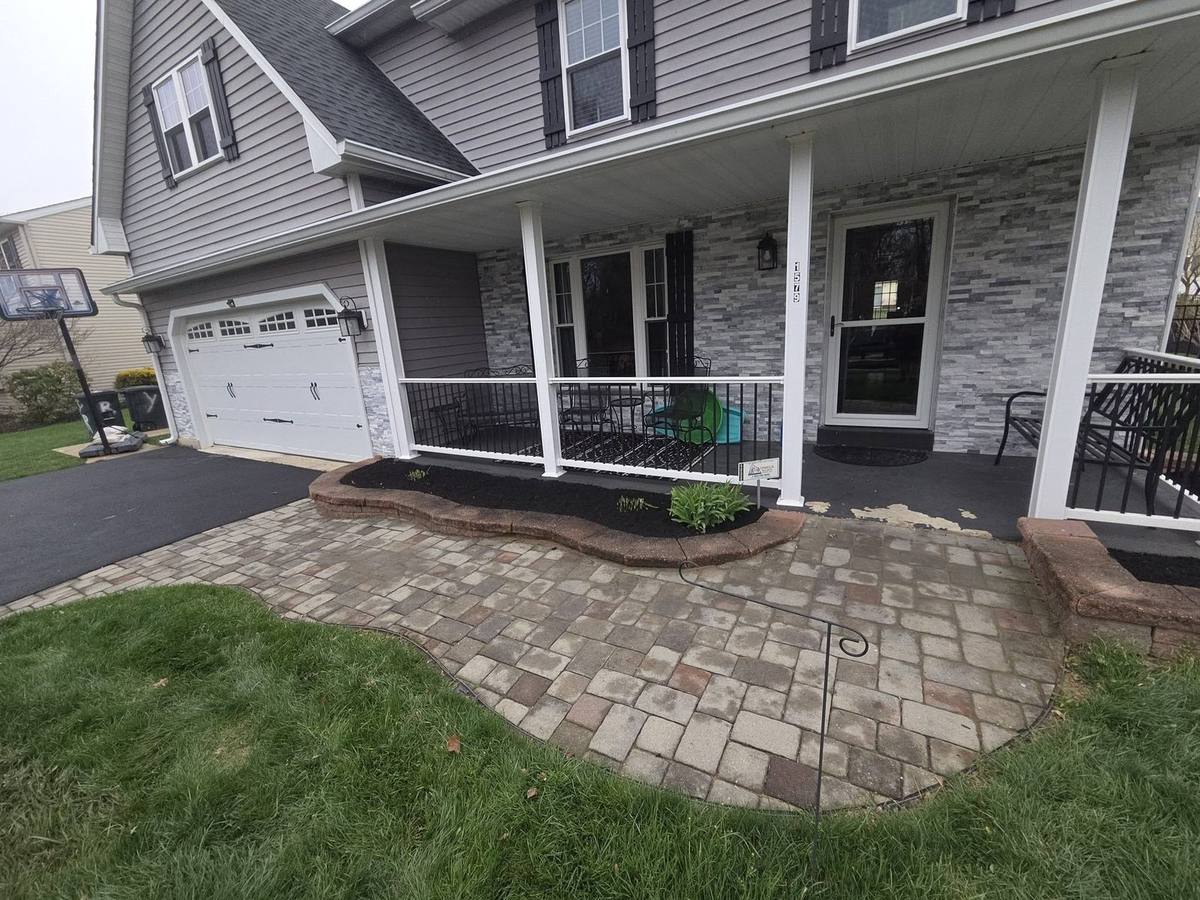
Paver patios, walkways and sitting areas. The part nobody sees is the base, and the base is why a patio stays flat.
- What it covers
- Paver patios, walkways, steps, fire pits and gravel sitting areas
- Typical job
- Rear patio, front walkway, or a patio and bed package
- Season
- Spring through late fall, weather permitting
- Pricing
- Quoted per square foot after an on site walk
Runs in
A paver patio is mostly excavation. What you pay for is the six to eight inches of compacted stone under the pavers, because that is the difference between a surface that is still flat in five years and one that sinks at the low corner after one winter.
Work photos
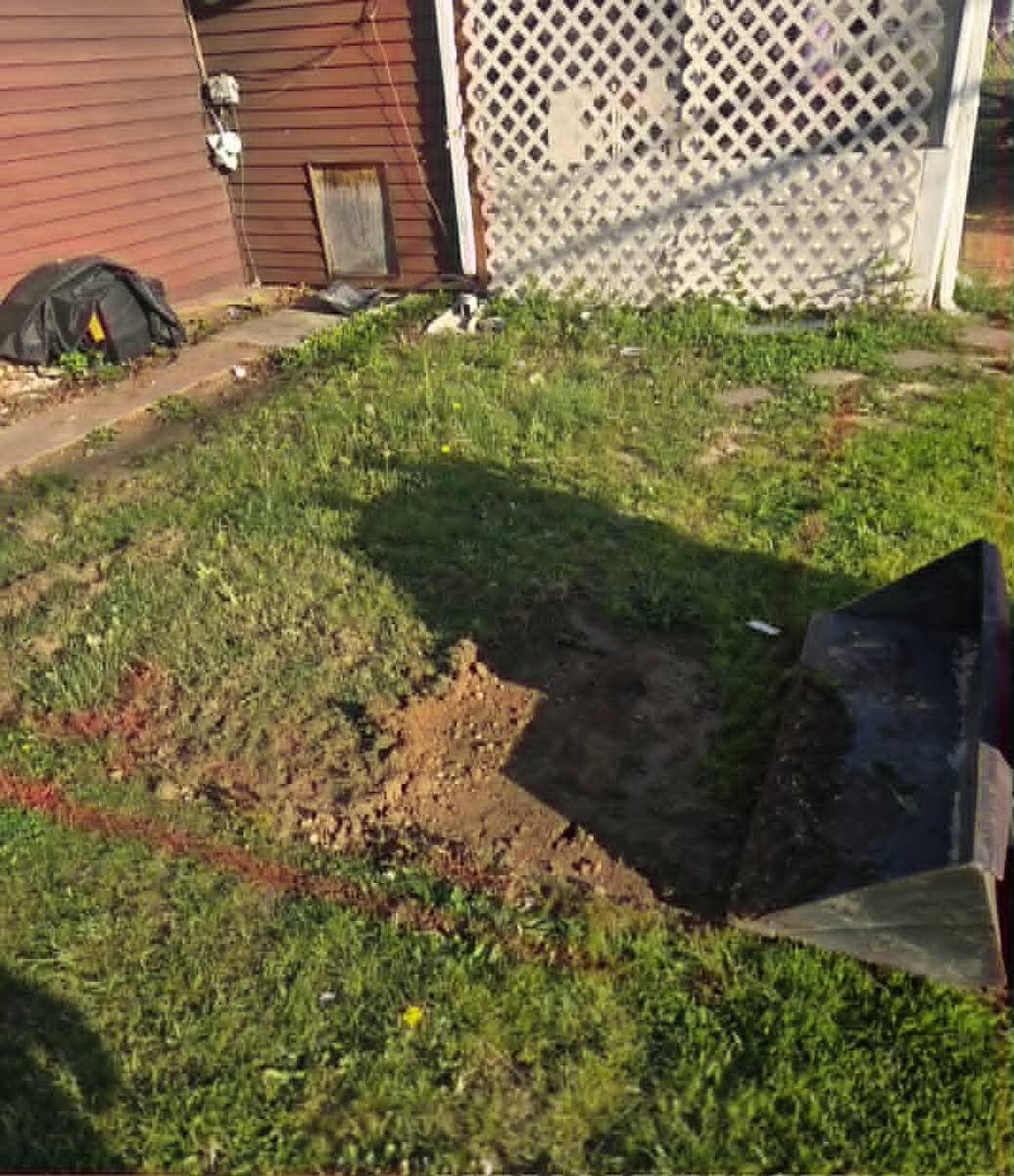
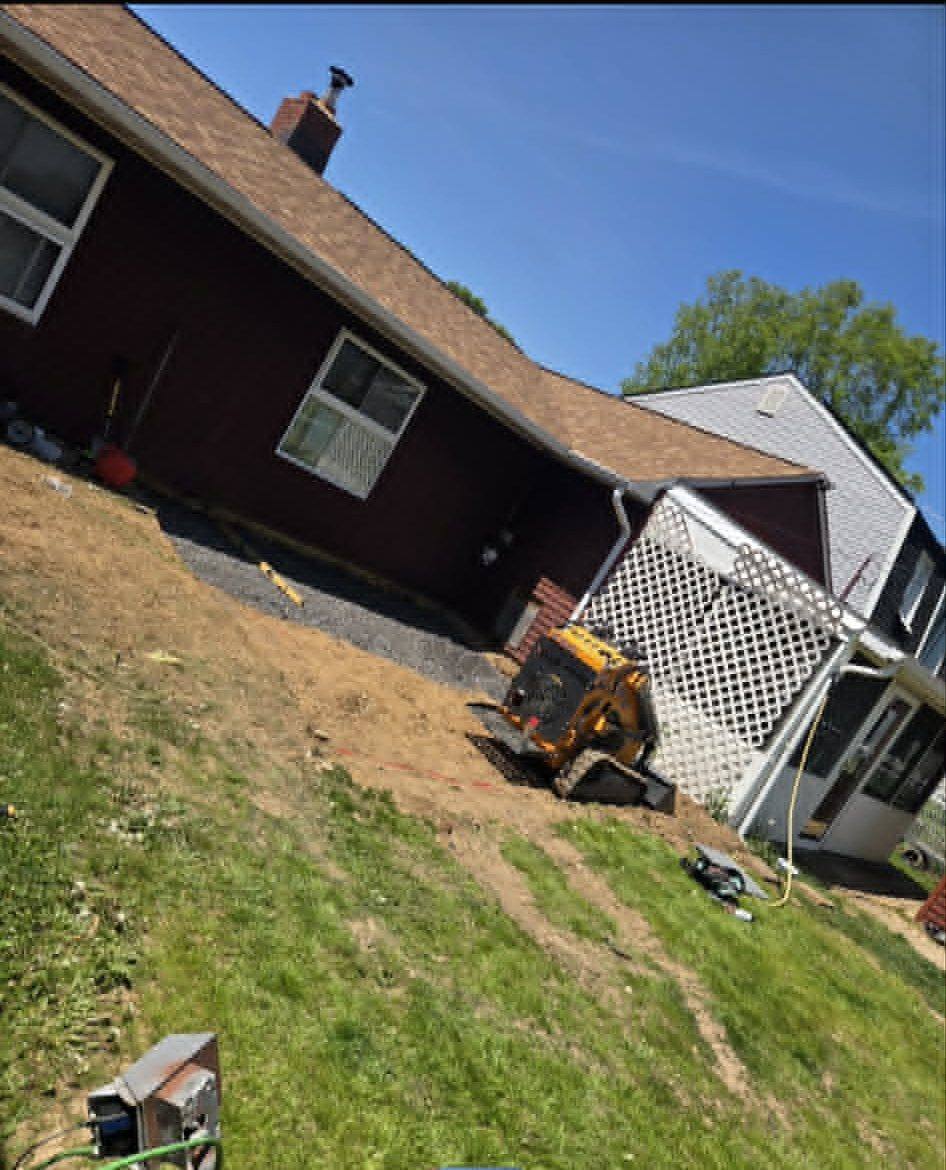
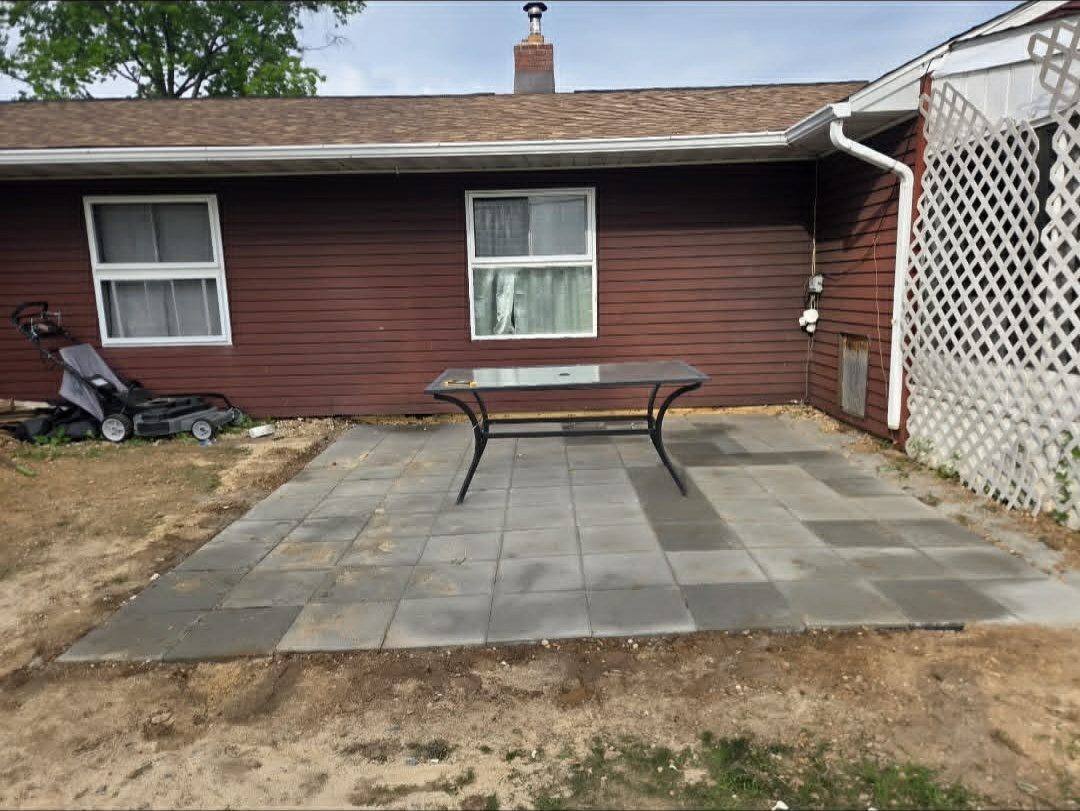
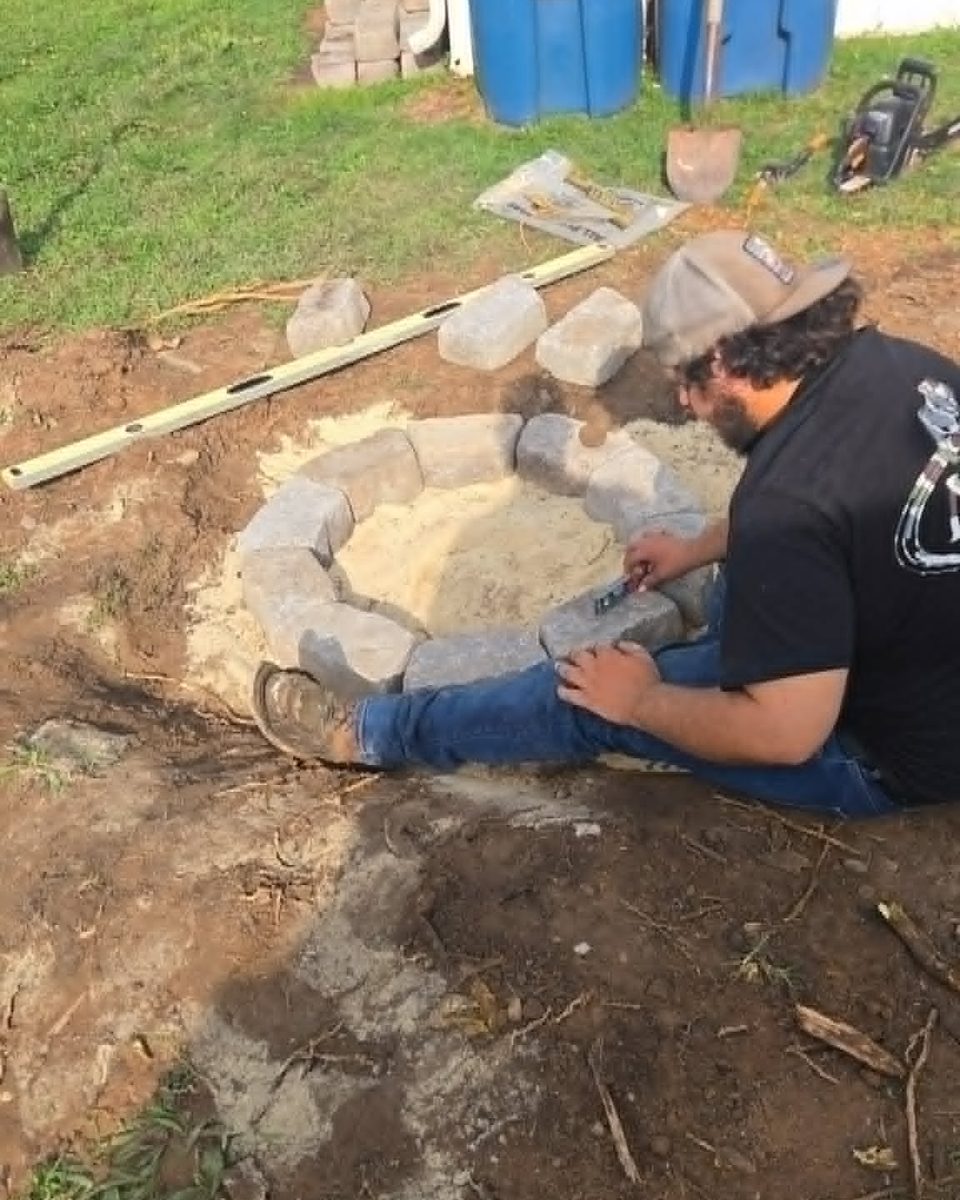
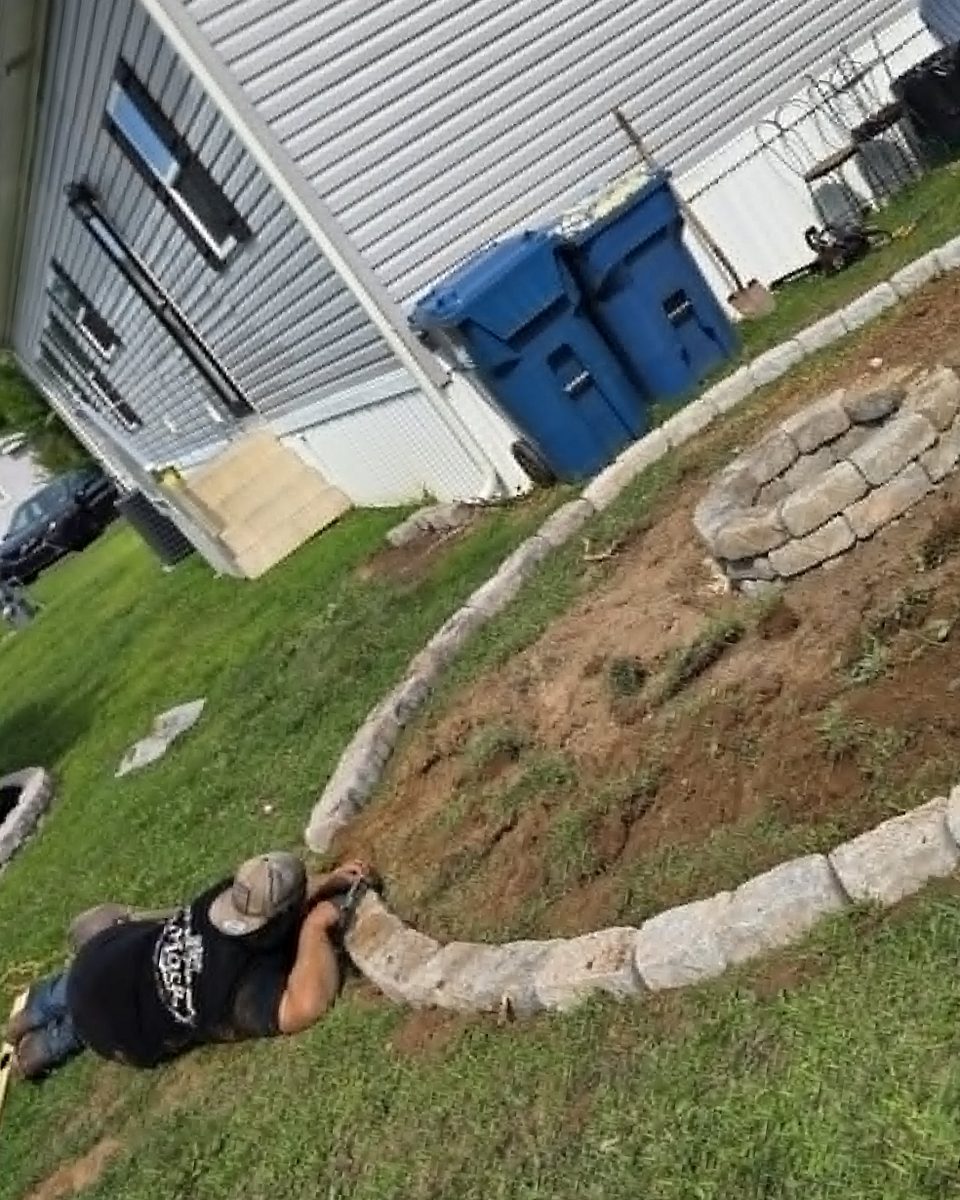
One patio, start to finish
Fire pits
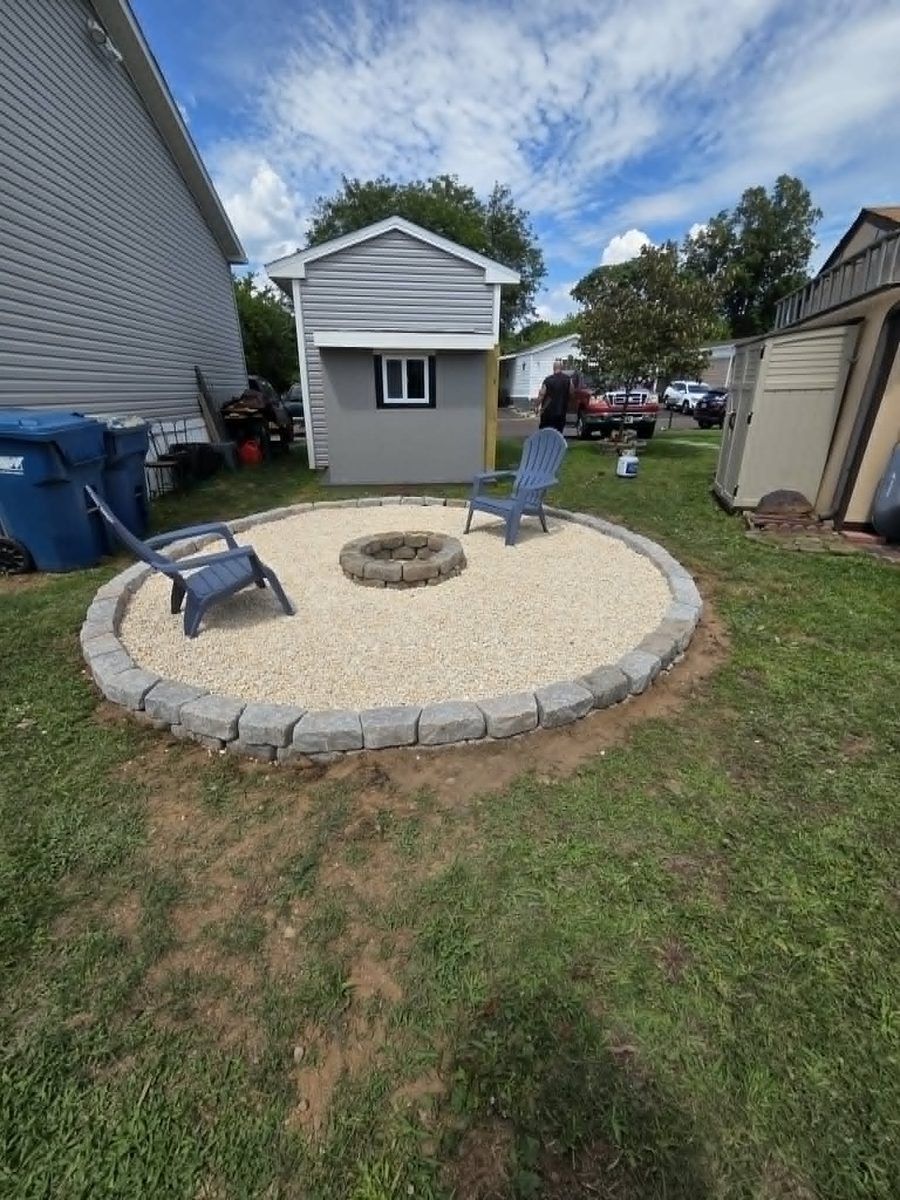
A fire pit and gravel sitting area
Not every sitting area is pavers. This one is a stone fire pit set on a leveled bed, a granite block border holding the circle, and washed gravel inside it. The border is doing the same job an edge restraint does on a paver patio. Without it the gravel walks out into the lawn by the second season.
What is included
What goes under and into a patio
Excavation and base
Dug to depth and backfilled with compacted crushed stone in lifts. Skipping compaction is the single most common reason a patio settles.
Screeded bedding layer
A consistent sand setting bed screeded flat, not spot leveled under each paver as it goes down.
Pattern and cuts
Field laid to the pattern you pick, with cut edges kept tight against the border course.
Edge restraint
Restraint pinned along the perimeter. Without it the outside course walks outward and the joints open.
Polymeric sand
Joints swept, compacted and locked so the surface sheds water and resists weeds between the pavers.
Grading away from the house
Pitched to carry water away from the foundation rather than pond against it.
From first text to done
- 1
Walk the space on site
Patios do not get quoted from a photo. Grade, drainage and access all change the number, so this one needs a visit.
- 2
Pick material and pattern
Paver style, color and border laid out so you can see it before anything is ordered.
- 3
Build from the bottom up
Excavate, base, compact, screed, lay, cut, restrain, sand. Each stage gets done before the next starts.
Where this service runs
About patios
How long does a paver patio take to build?
A straightforward residential patio is usually a two to four day job depending on square footage, how much excavation is involved and how far material has to be carried from the driveway. Rain pushes the schedule, because base material has to be compacted at the right moisture content rather than soaked.
Do I need a permit for a patio in Bucks County?
It depends on the township and on whether the patio is at grade or raised. Some municipalities treat an at grade paver patio as an improvement that needs no permit, others want it reviewed for impervious coverage. Check with your township before work starts, since the requirement varies from one town on this list to the next.
Can you build a gravel sitting area instead of a paver patio?
Yes. A gravel sitting area with a block border and a fire pit costs less than pavers over the same square footage and goes in faster, because there is no screed bed and no cutting. It still needs the area dug out, a border set to hold the edge and gravel deep enough to stay put underfoot. It is a good fit for a fire pit circle or a seating spot away from the house, and a poor fit anywhere you want to roll furniture or a grill across it.
Why do patios sink at one corner?
Almost always base failure or water. Either the stone base was not deep enough or not compacted in lifts, or the patio was pitched so runoff collects at that corner and washes fines out from under the pavers. Both are avoidable at build time and expensive to correct afterward.
Get a price on patios
Text the address or a photo of the property and you get a number back.
Free estimates. No obligation. Call or text (267) 665-7936.